
Why Nobody Fixed This $12 Billion Surgical Problem, Until Now | Liz McGloughlin
What does it take to redesign a surgical instrument that nobody has touched in sixty years?
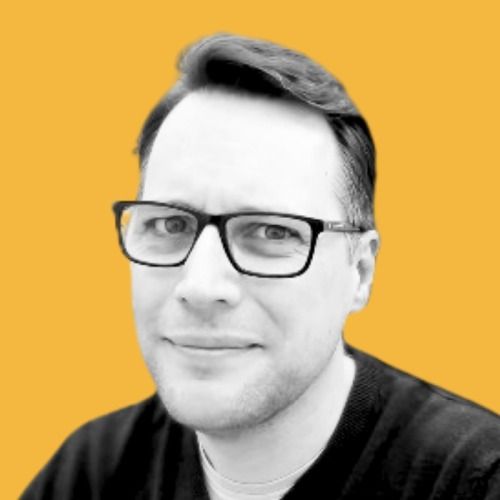
In this episode of Why Design?, Liz McGloughlin shares the belief that sits at the heart of her work: that hardware problems worth solving are the ones nobody has bothered to solve yet, and that the best place to find them is not a trend report but an operating room.
Rather than following a conventional route into medical devices through engineering alone, Liz brought a clinical lens to a design problem, co-founding Tympany Medical after watching surgeons work around tools that were slowing them down, damaging their bodies, and limiting what they could see.
That decision led to a startup building the first variable-angle, single-use rigid endoscope platform, backed by clinicians at some of the most respected hospitals in the world.
This conversation is not about disruption for its own sake.
It is about the discipline of needs-led innovation: what it means to validate a problem before you fall in love with a solution.
It is about building hardware in a jurisdiction that gives you support but not quite enough, and staying in the game anyway.
It is about what kind of person survives the founding years of a medical device company with two small children at home and no desire to work weekends.
Listen in on this exclusive episode.
Join the Why Design? community - teamkodu.com/whydesign
What You'll Learn
- 🔬 Why needs-led innovation, not trend spotting, produces the problems worth solving in MedTech.
- 🛠 How the MVP model must be reframed in a regulated industry, and what the real test cycle looks like.
- 💡 Why customer conversations in 2023 narrowed Tympany's engineering roadmap and made the product more attainable.
- ⚖️ What it actually costs to be a hardware founder with young children, and why delegation is a pay equity issue.
- 🏥 How to build clinical credibility from Galway with surgeons at Mayo Clinic, UPenn, and Johns Hopkins.
- 🤝 What Liz looks for in early hires, and why character and cultural instinct matter more than CV at the founding stage.
Memorable Quotes
"I fundamentally believe that if we stop developing hardware, we're ghosts."
"Instinct is a combination of knowledge and a community around you. I don't think it happens in isolation."
"The first people in the door are make or break."
"Keep talking to your customers. We were sending prototypes to clinicians, and we still couldn't nail whether we were getting it right. You have to keep going back."
"I sat in the front room of a house with no furniture, on the phone to Rory, and I thought: hold on, this could go anywhere."
Resources and Links
🎧 Listen on Spotify, Apple Podcasts, YouTube and Amazon - whydesign.club
👥 Join the Why Design? community - teamkodu.com/whydesign
📸 Follow @whydesignxkodu on Instagram
🎥 Watch full episodes - https://www.youtube.com/@whydesignpod
🔗 Follow Chris Whyte - linkedin.com/in/mrchriswhyte
🔗 Explore Tympany Medical - tympanymedical.com
🔗 Connect with Liz McGloughlin - https://www.linkedin.com/in/liz-mcgloughlin/
About the Episode
Why Design? is powered by Kodu, a specialist recruitment partner for the hardware and physical product development industry.
Through honest conversations with designers, engineers and creative leaders, we explore not just what they build but why they build it; the beliefs, decisions and responsibility behind meaningful work.
About Kodu
Why Design? is produced by Kodu, a recruitment partner for ambitious hardware brands, design consultancies and product-led start-ups.
We help founders and leadership teams hire exceptional talent across industrial design, mechanical engineering and product leadership bringing structure and clarity to one of the hardest parts of scaling.
🔗 Learn more - teamkodu.com
Transcript
(Transcribed by TurboScribe. Go Unlimited to remove this message.) This technology has been around for 50, 60,
Speaker:70 years using the same rod lenses, and
Speaker:so we felt it was about time that
Speaker:an innovation was made in the space to
Speaker:help surgeons operate more streamlined.
Speaker:Dr. Liz McLaughlin is a physician-turned-co
Speaker:-founder.
Speaker:She sat in operating rooms, watched surgeons work
Speaker:around a rigid endoscope that hadn't fundamentally changed
Speaker:since the 1960s, and decided to build a
Speaker:better one.
Speaker:Timpani Medical is redefining how endoscopic surgery works.
Speaker:Variable angle visualization, integrated cleaning, a single-use
Speaker:platform, a market worth over 12 billion dollars
Speaker:in the U.S. alone.
Speaker:Starting in ENT and already getting clinical feedback
Speaker:from surgeons at Mayo Clinic, John Hopkins, and
Speaker:UPenn.
Speaker:But here is what most people in the
Speaker:industry would not have seen coming, the former
Speaker:COO of Carl Storck USA, the number one
Speaker:rigid endoscope company in the world, is now
Speaker:the chairperson of Timpani's board.
Speaker:Someone who spent 30 years selling the product
Speaker:Timpani Medical is here to replace.
Speaker:He chose their side, and that is where
Speaker:this conversation gets uncomfortable.
Speaker:How do you defend design choices where regulation
Speaker:risk timelines push towards compromise?
Speaker:Liz said something in this conversation that I
Speaker:keep coming back to.
Speaker:I fundamentally believe that if we stop developing
Speaker:hardware, we're goosed.
Speaker:So I think we have to have people
Speaker:doing hard stuff for hard problems in hardware.
Speaker:This episode is about what it takes to
Speaker:build a physical product in one of the
Speaker:most regulated, most scrutinized industries in the world,
Speaker:where design is not decoration, where the gap
Speaker:between an idea and a product that ships
Speaker:is enormous, and where the people who close
Speaker:that gap matter more than most people realize.
Speaker:This is Why Design.
Speaker:Liz, welcome to Why Design.
Speaker:Thank you so much for joining me.
Speaker:Thank you very much for having me, Chris.
Speaker:You're very welcome.
Speaker:Looking forward to diving into this.
Speaker:So, Liz, you didn't start Timpani from a
Speaker:trend deck.
Speaker:This began with clinical immersion and seeing a
Speaker:problem up close.
Speaker:But so before we get into your background,
Speaker:take me back to a moment where everything
Speaker:shifted, where were you exactly when you saw
Speaker:the unmet need?
Speaker:Perhaps you could play the scene for us.
Speaker:Yeah, absolutely.
Speaker:So the program that myself and the co
Speaker:-founder did is a program called BioInnovate.
Speaker:It's a program that's really focused on needs
Speaker:led innovation.
Speaker:And so part of that is stepping back
Speaker:and looking and observing in the clinic, whether
Speaker:it's the operating room, whether it's the outpatient
Speaker:department and trying to see where there are
Speaker:gaps in the healthcare system.
Speaker:And really for us, some of the real
Speaker:challenges were occurring in the operating room.
Speaker:And they weren't just occurring for the patient,
Speaker:they were actually occurring with the surgeons and
Speaker:the types of tools that they had access
Speaker:to.
Speaker:And really driven by Rory, whose background is
Speaker:in medical device design, he could really see
Speaker:that there was an opportunity here around being
Speaker:able to see around corners, being able to
Speaker:operate without having to continuously change the angle
Speaker:of view of the tools.
Speaker:And so those insights of how the surgeon
Speaker:was performing the procedures were part of how
Speaker:the tympani story began.
Speaker:Amazing.
Speaker:So to correct me if I'm wrong, so
Speaker:before tympani, it was to change angle, you
Speaker:change tool.
Speaker:So it's lots of kind of in and
Speaker:out.
Speaker:And I guess quite a long procedure that
Speaker:which those cuts down.
Speaker:Yeah, depending on the clinical area.
Speaker:So I think one of the things that
Speaker:really drove me towards the solution in this
Speaker:company was, you know, the technology that we're
Speaker:talking about is a rigid endoscope.
Speaker:Rigid endoscopes are used for lots of different
Speaker:procedures.
Speaker:They're used in ENT surgery, they're used in
Speaker:neurosurgery, they're used in laparoscopy, they're used in
Speaker:urology, gynecology.
Speaker:So really lots of different areas where this
Speaker:issue is a problem.
Speaker:And traditionally how the surgeons have used the
Speaker:clinical, the site of intervention was with a
Speaker:rod lens.
Speaker:So a rod is a long pipe of
Speaker:light.
Speaker:And so that light is at a fixed
Speaker:angle.
Speaker:And so they have to change the angle
Speaker:every time that they use the scope at
Speaker:the moment.
Speaker:And so we felt in the modern kind
Speaker:of evolution of technology that this is kind
Speaker:of a crazy way for surgeons to be
Speaker:operating.
Speaker:And that's kind of how it evolved.
Speaker:And this technology has been around for 50,
Speaker:60, 70 years using the same rod lenses.
Speaker:And so we felt it was about time
Speaker:that an innovation was made in the space
Speaker:to help the surgeon operate more streamlined.
Speaker:And what did the clinicians say when you
Speaker:guys asked, why is it done like this?
Speaker:So actually one of the key moments for
Speaker:us, we were working with some US-based
Speaker:clinicians and Rory had a bit of a
Speaker:sketch on the back of this paper around
Speaker:trying to access and illuminate the surgical site
Speaker:in a better manner.
Speaker:And the surgeon said, I was only thinking
Speaker:about that last night.
Speaker:I was like going to sleep thinking, how
Speaker:on earth do we get more light into
Speaker:the small spaces in ENT so that we
Speaker:can do the operations better?
Speaker:So I think those kind of aha moments
Speaker:that we're not the only one thinking about
Speaker:this problem and that what we've seen is
Speaker:validated by the clinician.
Speaker:It was really important point for us very
Speaker:early on.
Speaker:Amazing.
Speaker:Was that the first kind of moment where
Speaker:you thought we might actually be able to
Speaker:solve this or fix this problem?
Speaker:I think it was probably the first moment
Speaker:where I thought it was a problem that
Speaker:was worth solving, I suppose.
Speaker:Knowing whether you can fix it or not
Speaker:is kind of an iterative process, I think.
Speaker:Before we dive back in, this one is
Speaker:for founders and CEOs building physical products.
Speaker:If you're thinking about hiring a VP of
Speaker:product, chief product officer, or head of R
Speaker:&D, this is not just another hire.
Speaker:It defines how your roadmap is set, how
Speaker:your teams are built, and how your company
Speaker:competes.
Speaker:At Kodu, we specialize in securing senior product
Speaker:and engineering leaders for hardware businesses entering their
Speaker:next stage of growth.
Speaker:Focused, discreet, high consequence.
Speaker:If that decision is on your horizon, find
Speaker:me, Chris White, on LinkedIn, and let's talk
Speaker:it through.
Speaker:Perhaps you could give us the elevator pitch
Speaker:of Tempany and who you are, what you
Speaker:do.
Speaker:For those who don't know.
Speaker:I'm Dr. Liz McLaughlin.
Speaker:I'm the co-founder at Tempany Medical.
Speaker:Tempany Medical are redefining how endoscopic surgery is
Speaker:performed by integrating variable angle visualization and integrated
Speaker:cleaning into a single use platform for rigid
Speaker:endoscopy.
Speaker:This is an over $12 billion market opportunity
Speaker:in the US alone across multiple clinical indications,
Speaker:starting off with ENT.
Speaker:Amazing.
Speaker:You've clearly practiced that for the investor pitch.
Speaker:It's never the same twice, though.
Speaker:That's the key.
Speaker:No.
Speaker:Good.
Speaker:So long as the call there is relevant.
Speaker:Design in medtech is often treated like a
Speaker:nice-to-have, but if something isn't usable,
Speaker:it doesn't get used.
Speaker:When did you form your opinion on that?
Speaker:I think very early on when we were
Speaker:doing needs-led innovation during the YNB program,
Speaker:I had a good understanding that there's a
Speaker:lot more to the process of healthcare innovation
Speaker:than meets the eye.
Speaker:So you can have a lovely looking product,
Speaker:but the end user and the different stakeholders
Speaker:that interact with this are actually hugely important
Speaker:in whether that product gets adopted or not.
Speaker:And that is probably something that's being more
Speaker:and more acknowledged over the course of time.
Speaker:And I think it's really important to have
Speaker:that at the heart of your business.
Speaker:We're quite a unique founding team, actually, from
Speaker:that perspective, with my background in clinical medicine
Speaker:and Murray's in industrial design and medical device
Speaker:design.
Speaker:We come from quite a different background than
Speaker:a lot of traditional medical device teams, and
Speaker:that has a lot of strengths in terms
Speaker:of us having very clinician and user-centered
Speaker:discussions around both the product features, but also
Speaker:the usability and the human factors of the
Speaker:product.
Speaker:Amazing.
Speaker:And why do you think in med tech,
Speaker:science still gets undervalued?
Speaker:I think the complexity of the engineering in
Speaker:medical devices is front and center, and it
Speaker:has to be because it has to be
Speaker:both really robustly designed, extremely safe, and there's
Speaker:a huge amount of regulatory barriers to getting
Speaker:a product to market.
Speaker:And so that's where a huge cost base
Speaker:comes into it in terms of running programs
Speaker:within either small companies or big companies.
Speaker:And then there's sort of an afterthought.
Speaker:But I think from where we have worked
Speaker:best is that we have really strong clinician
Speaker:relationships, which have driven a lot of our
Speaker:product features.
Speaker:And so the engineering then can fit into
Speaker:that nicely after you've had that work done
Speaker:with the end user.
Speaker:And there's really not much you can do
Speaker:if you've engineered the product and then go
Speaker:to the end user.
Speaker:So it's probably a legacy issue as to
Speaker:how products were designed and then handed over.
Speaker:And as regulatory has increased in its burden,
Speaker:you've had to just add more engineering costs
Speaker:that build and test, build and test, build
Speaker:and test for the regulatory requirements has meant
Speaker:that it's actually just harder to fund that
Speaker:design phase process.
Speaker:And it does mean that you have a
Speaker:longer time to market.
Speaker:And I suppose that's the other dance that
Speaker:you're trying to work out is how fast
Speaker:can we get product to market?
Speaker:Yeah, exactly.
Speaker:And it leads me on to my next
Speaker:question.
Speaker:How do you defend design choices when regulation,
Speaker:risk, timelines, push towards compromise?
Speaker:Because you want to have a great looking
Speaker:and usable product as well.
Speaker:Yeah, absolutely.
Speaker:I think it's, you have to integrate it
Speaker:into your processes.
Speaker:So, you know, we, as I say, we
Speaker:do every eight or nine weeks we're meeting
Speaker:doctors around our product.
Speaker:And we're not compromising on that piece.
Speaker:Regulation is here.
Speaker:It's going to always be here.
Speaker:It has to be here.
Speaker:So you just have to be creative.
Speaker:And I suppose work with people who understand
Speaker:the interface between the fact that it needs
Speaker:to be well designed and regulations.
Speaker:So that's where you have to be kind
Speaker:of a broader thinker when it comes to
Speaker:your strategy.
Speaker:Yeah, I'm guessing, especially in your case, you
Speaker:know, you're competing with a, you know, a
Speaker:technology that's been around for decades, you know,
Speaker:and clinicians, I'm guessing, aren't the quickest to
Speaker:adopt, to change.
Speaker:You'll probably correct me there.
Speaker:But, you know, so it's got to stand
Speaker:out.
Speaker:It's got to make them want to use
Speaker:it.
Speaker:Absolutely.
Speaker:And so I suppose I've mentioned at the
Speaker:beginning, quite specifically, that this is a single
Speaker:use endoscope.
Speaker:And so when you look at single use
Speaker:as an evolution, a lot of the single
Speaker:use products have been just the same product
Speaker:in a single use version.
Speaker:From our perspective, why bother?
Speaker:There's no point.
Speaker:So you have to have differentiation if you're
Speaker:going to introduce that real kind of hard
Speaker:shift from a reusable to a single use.
Speaker:And that's something that we've worked really hard
Speaker:on to make sure that moving single use
Speaker:is differentiated, but it's also at the least
Speaker:impact as possible.
Speaker:So you're not just moving single use for
Speaker:the sake of it.
Speaker:You're moving because it has better features, better
Speaker:impact for the patient, and also is much
Speaker:more ergonomically designed.
Speaker:So one of the huge pieces of feedback
Speaker:that we always get is, oh, my goodness,
Speaker:this is so light.
Speaker:It's so easy to use.
Speaker:And that's just a really phenomenal piece of
Speaker:feedback that we weren't expecting.
Speaker:We didn't design that in.
Speaker:We didn't think that that was going to
Speaker:be the kind of number one thing that
Speaker:we get feedback on.
Speaker:But because we've been in market discussing with
Speaker:customers when we give them prototypes, they really
Speaker:want it to be that light.
Speaker:And actually, then you come back to the
Speaker:engineers and go, it has to stay that
Speaker:light now.
Speaker:So then there's a real sorry, how light
Speaker:was it when you brought them?
Speaker:So yeah, but that's a really important piece
Speaker:for us about kind of how do we
Speaker:get people to change practice?
Speaker:And actually, ergonomics is a really important thing.
Speaker:Surgeons are looking to have a professional practice
Speaker:beyond their clinical training of 35 years, most
Speaker:of them.
Speaker:So you can't have something that's really heavy
Speaker:that causes them neck pain, back pain.
Speaker:And actually, 80% of the rhinologists surveyed
Speaker:in the Australian study have neck and back
Speaker:pain associated with their practice.
Speaker:So it's actually a really big problem.
Speaker:And so design and ergonomics and human factors
Speaker:actually comes full circle as to why they
Speaker:will change as well.
Speaker:So it integrates that piece of how do
Speaker:we compete with the incumbents, but also why
Speaker:is the design piece very important?
Speaker:Was that a happy accident that you're solving
Speaker:that problem as well?
Speaker:In some ways it was, but in a
Speaker:lot of ways it's to do with the
Speaker:advances in the technology.
Speaker:So when you look at the traditional technology,
Speaker:there's a rod lens and a camera system
Speaker:was put at the back end of it.
Speaker:So it creates this back heavy piece of
Speaker:equipment.
Speaker:We're putting a camera at the tip.
Speaker:And so the system is much lighter overall,
Speaker:just by virtue of the fact that we're
Speaker:using a different technology.
Speaker:So when we started to design it, it
Speaker:was always going to be lighter because of
Speaker:those legacy issues that they've had with the
Speaker:product.
Speaker:Yeah.
Speaker:Brilliant.
Speaker:And then, you know, for someone listening or
Speaker:watching that works within medical devices, medtech, what's
Speaker:one design principle they should steal or borrow?
Speaker:Keep talking to your customers.
Speaker:So we were around a little while and
Speaker:we did a first iteration of our product
Speaker:development during COVID.
Speaker:And actually we had loads of sessions where
Speaker:we were sending prototypes to the clinicians.
Speaker:We were doing video sessions in their temporal
Speaker:bone labs.
Speaker:And yet we couldn't really hit the nail
Speaker:on the head in terms of, are we
Speaker:getting this right or not?
Speaker:And so we took a step back, maybe
Speaker:towards the beginning of 23 and sort of
Speaker:re-scoped how we were going to discuss
Speaker:things with the customers and went back out
Speaker:and, you know, had a lot of interviews,
Speaker:market feedback, variations on features, you know, how
Speaker:far do we need to go on the
Speaker:engineering side in terms of that angulation?
Speaker:Do they want 10 different angles?
Speaker:Do they want five angles?
Speaker:Do they want three angles?
Speaker:They're actually happy with two angles.
Speaker:And so by talking to the customer over
Speaker:and over again, we were able to actually
Speaker:narrow down how our engineering roadmap looked like.
Speaker:And then that makes it much more attainable
Speaker:in terms of your product development.
Speaker:So you can add all these bells and
Speaker:whistles and features if you're not talking to
Speaker:them and you're probably going in the wrong
Speaker:direction because most of them, if you really
Speaker:nail down and you say, okay, what will
Speaker:do 90% of your procedures?
Speaker:And that's where you can really get things
Speaker:right or wrong, I think, if you're not.
Speaker:Yeah, absolutely.
Speaker:Your first product doesn't need to be the
Speaker:one that you finish with.
Speaker:It's the minimum viable product to get out
Speaker:to market.
Speaker:It's funny you say minimum viable, right?
Speaker:So, and maybe I think that's a really
Speaker:challenging thing in medical devices.
Speaker:I think it's actually one of the biggest
Speaker:hurdles because in all other product developments, consumer
Speaker:brands and anything that's not as highly regulated,
Speaker:you can iterate quickly and put it in
Speaker:market.
Speaker:Medical devices, because you have so much regulatory
Speaker:to get through, your minimum viable product actually
Speaker:needs to be, how quickly can you get
Speaker:a simulated test model to test your minimum
Speaker:viable?
Speaker:So it's actually a slightly different thing of
Speaker:getting to market with your minimum viable.
Speaker:It's how quickly can I get to the
Speaker:customer to test it, be it a simulated
Speaker:model, an animal model, a cadaver specimen.
Speaker:That's the real MVP cycle that I think
Speaker:people need to really think about and get
Speaker:that piece correct.
Speaker:Because if they get that wrong, it can
Speaker:cause a lot longer term issues.
Speaker:So identifying where and how you get that
Speaker:so-called MVP tested in a medical device
Speaker:roadmap is key.
Speaker:Yeah, because I'm guessing that will unlock funding
Speaker:and customers because you've proven.
Speaker:Exactly.
Speaker:Yeah, exactly.
Speaker:Well, okay.
Speaker:Well, let's talk around kind of some decisions
Speaker:that defined Timpani then.
Speaker:People romanticize startups like it's all instinct.
Speaker:Your path sounds more disciplined, more disciplined de
Speaker:-risking.
Speaker:Perhaps you could talk me through a moment
Speaker:where it started to feel like a real
Speaker:company.
Speaker:You followed, I think, the Stanford biodesign approach.
Speaker:What was the hardest filter for your idea
Speaker:to pass?
Speaker:So I think understanding markets that are not
Speaker:really, really hot and sexy effectively is really
Speaker:challenging in MedTech.
Speaker:So you'll always be able to get data
Speaker:on heart failure, valve replacements, stents, neurovascular, peripheral
Speaker:vascular.
Speaker:They're all really well-defined areas of medical
Speaker:device development and have really, really strong data.
Speaker:So I think when you're going into more
Speaker:of an area which is around tools and
Speaker:instruments, that becomes actually much more tricky to
Speaker:quantify numbers and strategize around that.
Speaker:I think I had a little bit of
Speaker:a leg up advantage in understanding that coming
Speaker:from a clinical background, having sat in many
Speaker:operating rooms, watching lots of different procedures using
Speaker:rigid scopes that I was able to, even
Speaker:if I didn't have the numbers, I could
Speaker:go, these are used in a lot of
Speaker:cases.
Speaker:Even if I can't pull exact numbers, I
Speaker:know when I speak to an orthopedic surgeon,
Speaker:a general surgeon, a neurosurgeon, an ENT surgeon,
Speaker:they all handle these scopes.
Speaker:And so you get that validation more easily
Speaker:from that community.
Speaker:But I do think that market and market
Speaker:quantification is very challenging and you just have
Speaker:to keep chipping away and trying to get
Speaker:as much detail as possible.
Speaker:And as you said, like I think that
Speaker:for me, I was using some instincts to
Speaker:make some of those decisions because I had
Speaker:knowledge.
Speaker:So I think instinct is a combination of
Speaker:gosh, knowledge and maybe the community around you.
Speaker:So I don't think it happens in isolation.
Speaker:No, absolutely.
Speaker:I'm guessing, you know, on those areas where
Speaker:there is more data available, that's because there's
Speaker:obviously been a lot more research done.
Speaker:There's a lot more medical devices in that
Speaker:area.
Speaker:So is it harder to therefore get funding
Speaker:in that area or in, say, an area
Speaker:like ENT where there's not as much data?
Speaker:Yeah, I think funding in medical devices is
Speaker:challenging.
Speaker:I think we're in a situation now where
Speaker:hardware is really difficult.
Speaker:I suppose this is why you have this
Speaker:podcast is talking about hardware.
Speaker:Hardware is hard.
Speaker:I fundamentally believe that if we stop developing
Speaker:hardware, we're goosed.
Speaker:So I think we have to have people
Speaker:doing hard stuff for hard problems in hardware.
Speaker:But funding is difficult in medical devices, full
Speaker:stop.
Speaker:So I would not like to say, you
Speaker:know, just because you're doing a vascular device,
Speaker:it's easier.
Speaker:I think it's just a more known pathway.
Speaker:It's the structure of your road map is
Speaker:clearer and your go to market strategy is
Speaker:clearer.
Speaker:And then the also piece that is important
Speaker:is that you've got a clear line of
Speaker:sight on strategics and acquirers and kind of
Speaker:how they're playing out in the market.
Speaker:So that's the difference.
Speaker:Doesn't mean that there is no funding.
Speaker:No, but it does take a bit more
Speaker:work and a bit more creativity.
Speaker:Yeah, absolutely.
Speaker:So what's, you know, you're gaining funding.
Speaker:So what surprised you most around turning the
Speaker:clinical need into a fundable business?
Speaker:How many hours I would spend on the
Speaker:phone to solicitors?
Speaker:Have you kept a tally?
Speaker:No, I haven't kept a tally.
Speaker:I'm fairly good friends with them though.
Speaker:No, I think medicine and clinical practice is,
Speaker:and analyses in particular, it's all go, like
Speaker:it's quick decision making and then you're done.
Speaker:And I think what I, what always surprises
Speaker:me in this, in, I suppose, the more
Speaker:business side of things and the more company
Speaker:development is there's nothing that happens really quickly.
Speaker:So it is just a case of like,
Speaker:you just have to keep showing up every
Speaker:day and keep moving things onwards.
Speaker:And so there's, I suppose, a resilience piece
Speaker:there that just because it didn't happen yesterday,
Speaker:doesn't mean it's not going to happen today.
Speaker:And so you have to keep motoring like
Speaker:that.
Speaker:So that's probably the biggest surprise.
Speaker:But also one of the things I think
Speaker:medicine probably prepares you for more, because there's
Speaker:so much uncertainty in medicine and you have
Speaker:to make decisions without all of the information
Speaker:at the table.
Speaker:So in a startup, you're always making decisions
Speaker:without having 100% of information.
Speaker:So I think there's synergies from that piece.
Speaker:Yeah, absolutely.
Speaker:And you went through the Enterprise Ireland pathway.
Speaker:Yeah, going through that programme.
Speaker:First, before I get into the question, if
Speaker:you could outline what that is for people
Speaker:that may be listening in Ireland.
Speaker:Yeah, so everybody in Ireland who works in
Speaker:startups knows who Enterprise Ireland is.
Speaker:So for those who aren't familiar, Enterprise Ireland
Speaker:is a state agency.
Speaker:It is actually one of the biggest backers
Speaker:of startups globally.
Speaker:I think it's top three under of early
Speaker:stage businesses across the world.
Speaker:That might be old data, but that is
Speaker:definitely something that was in place a number
Speaker:of years ago.
Speaker:They have a number of different programmes.
Speaker:Some of them are university based.
Speaker:Some of them are based on funding as
Speaker:part of equity rounds.
Speaker:And then some of them are funded through
Speaker:partnership programmes with the Department of Trade and
Speaker:Enterprise.
Speaker:We have tapped into all of those.
Speaker:And we're really lucky here to have access
Speaker:to those programmes.
Speaker:And there's a myriad of businesses based, a
Speaker:lot of medtech business based on the West
Speaker:of Ireland that have worked with Enterprise Ireland
Speaker:to get their businesses up and going.
Speaker:And a lot of products now either very
Speaker:close to market or in market as part
Speaker:of that support.
Speaker:So very successful agency overall.
Speaker:And so we've been really lucky to be
Speaker:able to work with them.
Speaker:One of the quirks, I suppose, is that
Speaker:at the beginning of a lot of these
Speaker:projects is you do what's known as a
Speaker:commercialisation fund that's based in the university.
Speaker:So there's a university hold the budget, and
Speaker:then you have to be founders effectively, working
Speaker:through the project, trying to de-risk their
Speaker:technology roadmap, their opportunity.
Speaker:I think it's an interesting one for a
Speaker:space like life sciences and medical devices.
Speaker:To raise initial capital for an idea from
Speaker:friends and family is really, really tricky, especially,
Speaker:I think, in Europe.
Speaker:So this allows you to have a kind
Speaker:of period of two years de-risking opportunity
Speaker:and then going to specific angels or seed
Speaker:funds with not just something on the back
Speaker:of a piece of paper.
Speaker:And I think that's a really important piece
Speaker:of how do we get hardware products from
Speaker:inception out into the marketplace.
Speaker:So that's the first step.
Speaker:Subsequently, then, we were very lucky to get
Speaker:a disruptive technology innovation fund.
Speaker:This is a partnership project.
Speaker:So how it works is there are usually
Speaker:one research performing organisation, so a university or
Speaker:an academic institution, then another industrial partner, and
Speaker:then the lead partner effectively is generally either
Speaker:the startup or the SME.
Speaker:And so you have this consortium and you're
Speaker:working on a defined goal, but it's really
Speaker:a kind of industrial research.
Speaker:So it helps companies that are trying to
Speaker:be very innovative and, you know, not just,
Speaker:you know, taking the next step on their
Speaker:own, but really trying to take big leaps
Speaker:in terms of technology.
Speaker:So we've had two of those funds awarded
Speaker:to the company and it works with the
Speaker:National College of Art and Design and RCSI
Speaker:and UCD in Vermont and then Gentian Services
Speaker:down in Shannon.
Speaker:So have had a very broad base of
Speaker:collaboration across multiple institutions through those projects, which
Speaker:I think is really powerful as well.
Speaker:And coming back to kind of how complicated
Speaker:medical devices is, you know, you just need
Speaker:as many levels of expertise as possible to
Speaker:get you to the next phase of development.
Speaker:You can't hire it all.
Speaker:It's not possible.
Speaker:No.
Speaker:So you get to tap into the hive
Speaker:mind, so to speak, you know, then there's
Speaker:an advisory side, is there, or is it
Speaker:more of a kind of go out and
Speaker:seek advice or experts within the community?
Speaker:There are advisory mechanisms through Enterprise Ireland as
Speaker:well.
Speaker:And so there are smaller grants you can
Speaker:get to support very early stage projects to
Speaker:kind of tease out ideas, get some mentorship
Speaker:and that as well throughout the lifecycle of
Speaker:the business.
Speaker:So I think where we're at now, actually,
Speaker:as an ecosystem is that we're all starting
Speaker:to kind of outgrow what supports were there
Speaker:now and private capital isn't where it needs
Speaker:to be to get these companies to the
Speaker:next phase.
Speaker:So we're kind of looking to figure out
Speaker:how you can get companies to a certain
Speaker:point.
Speaker:Everything's going later and later.
Speaker:M&A is later, like Series B is
Speaker:later, Series C is later.
Speaker:We now have another funding gap, but I
Speaker:suppose that's a positive outcome of how the
Speaker:ecosystem is maturing, that you're not just having
Speaker:lots of seed projects that are going nowhere.
Speaker:You actually have quite a number that have
Speaker:gotten quite far and now just maybe need
Speaker:the last little leg up to get to
Speaker:the market.
Speaker:Yeah.
Speaker:Awesome.
Speaker:What have you learned about yourself through that
Speaker:process?
Speaker:I like moving things forward.
Speaker:I like the progress piece.
Speaker:Yeah.
Speaker:Also, I think I love building something from
Speaker:nothing.
Speaker:So we first kind of got offices in
Speaker:a place called the ATU.
Speaker:I hope this is kind of a university
Speaker:co-located incubation center effectively.
Speaker:So we started out there and kind of
Speaker:in the last year and a half, we've
Speaker:moved into our own offices.
Speaker:And it's that kind of forward momentum of
Speaker:like, okay, we're not just a project anymore.
Speaker:It's actually building something that's more robust.
Speaker:And so I really enjoy that part.
Speaker:Other things I've learned about myself, I became
Speaker:a mom as part of this whole process
Speaker:as well.
Speaker:I don't know which I've learned more from
Speaker:actually.